

Due diligence is the single stage of a business sale most likely to determine whether a transaction actually closes, and on what terms. Owners often focus their energy on preparing for negotiation, but the real test comes after a price is agreed in principle, when the buyer begins verifying every claim made about the business. Understanding what due diligence actually involves, and preparing for it properly, is one of the most valuable things a seller can do before going to market.

What Is Due Diligence in a Business Sale?
Due diligence exists to answer one central question for the buyer: is the business genuinely what it has been represented to be? It is the buyer's opportunity to verify financial performance, uncover risks that were not disclosed, and confirm that the assumptions underlying their offer are sound before they commit capital.
For sellers, due diligence can feel invasive, but it is a normal and necessary part of any credible transaction. Buyers who skip it, or conduct it superficially, are either inexperienced or planning to renegotiate aggressively later. Neither is a good sign.
What Are the Main Types of Due Diligence?
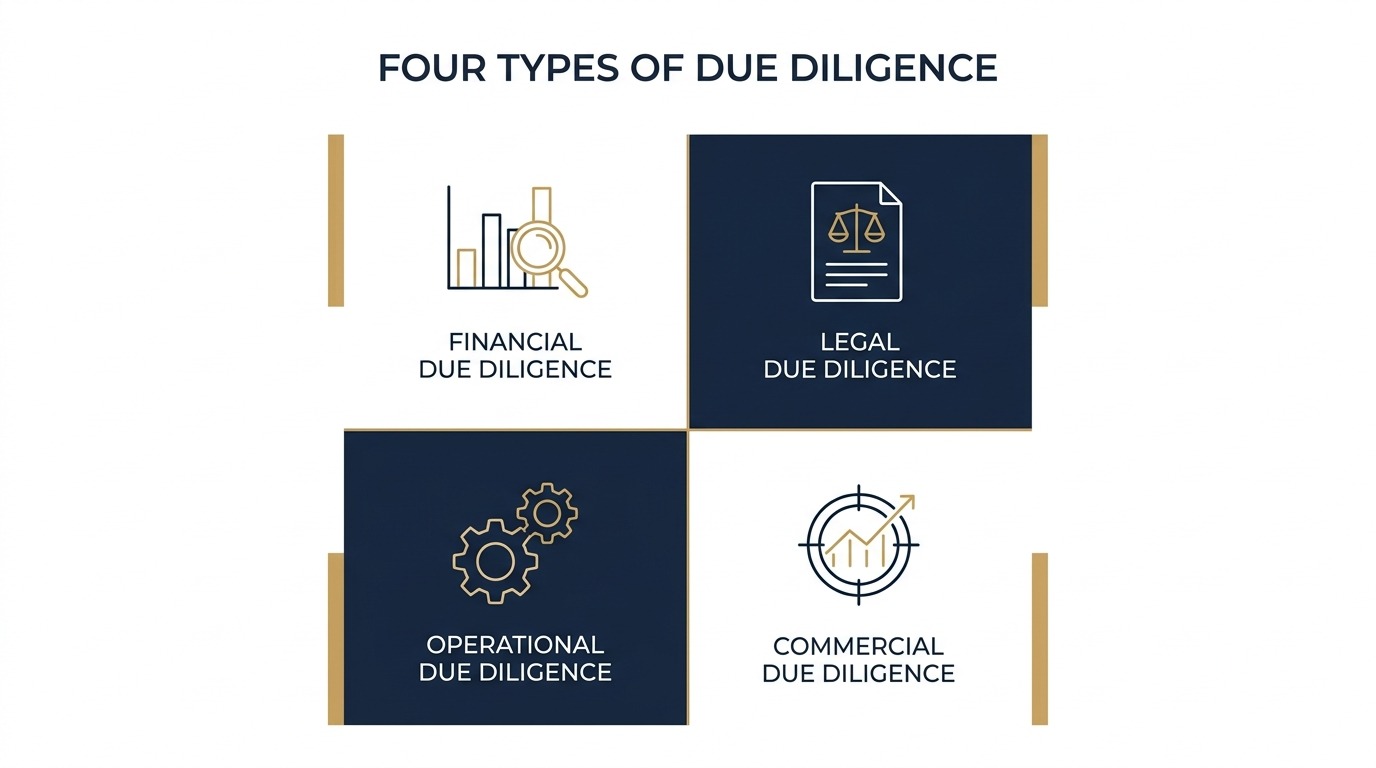
A thorough due diligence process typically covers four distinct workstreams - financial, legal, operational, and commercial - often running in parallel.
Financial due diligence. This is usually the most extensive category, involving a detailed review of historical financial statements, quality of earnings analysis, working capital trends, and verification that reported profits are genuine and sustainable, rather than inflated by one off items or aggressive accounting choices.
Legal due diligence. Lawyers review contracts, corporate structure, intellectual property ownership, employment agreements, litigation history, and regulatory compliance, looking for anything that could create liability or complicate the transfer of ownership.
Operational due diligence. This examines how the business actually runs day to day, including supplier relationships, key operational dependencies, systems and processes, and the extent to which performance relies on specific individuals rather than institutionalised processes.
Commercial due diligence. Buyers assess the business's market position, competitive dynamics, customer relationships and concentration, and the credibility of any growth assumptions built into the valuation.
For a deeper, workstream-by-workstream breakdown, see our ultimate due diligence guide.
What Do Buyers Look For in Due Diligence?
Beyond simply confirming the numbers, experienced buyers use due diligence to identify specific risk categories that commonly affect mid sized businesses:
Customer concentration. A small number of customers representing a large share of revenue is one of the most common red flags, since the loss of a single relationship could materially impact the business.
Key person dependency. If the business cannot function without the current owner or a small number of key staff, buyers factor the cost and risk of that transition into their offer.
Revenue quality. Recurring, contracted revenue is viewed very differently to one off or project based revenue, even if the headline numbers look similar.
Undisclosed liabilities. Legal disputes, tax exposures, or contractual obligations that were not clearly disclosed in the Information Memorandum can derail a deal late in the process, or trigger a significant price adjustment.
How to Prepare Your Business for Due Diligence
The businesses that move through due diligence smoothly are almost always the ones that prepared properly before going to market, rather than scrambling to produce information once a buyer starts asking for it.
Organise your financial records. Three to five years of clean, reconciled financial statements, ideally reviewed or audited, make a material difference to buyer confidence.
Normalise your earnings in advance. Identify and document any owner specific or one off items affecting reported profit, so buyers see a credible, defensible number from the outset.
Formalise key contracts. Customer, supplier, and employment agreements should be documented and, where possible, reduced in reliance on informal or verbal arrangements.
Reduce owner dependency where practical. Even modest steps toward delegating key relationships and decisions can materially improve buyer confidence.
Prepare a proper Information Memorandum. An investment grade IM, prepared with an advisor, gives buyers a structured and verified starting point, reducing the number of surprises that surface later.
Much of this overlaps with wider sale preparation — our guide on building a bulletproof exit strategy and our exit readiness assessment will help you get ahead of it well before you go to market.
Why Due Diligence Findings Lead to Renegotiation
It is common, even in well prepared transactions, for due diligence to surface issues that were not previously known to either party. When this happens, buyers will typically respond in one of a few ways: requesting a price reduction, proposing a change to deal structure such as a larger earnout component to offset perceived risk, or in more serious cases, walking away from the transaction entirely.
The best defence against this is thorough preparation before the process begins, alongside an advisor experienced enough to manage the negotiation if issues do arise, keeping the deal on track rather than letting it collapse over an issue that could reasonably be resolved. This is one clear area where a specialist broker protects your final sale price.
Due Diligence From the Buyer's Perspective
If you are the acquirer, due diligence is your primary tool for protecting your investment. It is worth resisting pressure to move too quickly through this stage, even when a seller is pushing for a fast close. A rushed due diligence process is one of the leading causes of post acquisition disputes and underperformance relative to expectations. Engaging experienced legal and financial advisors, and giving them genuine time to do the work properly, is a cost worth incurring relative to the risk of an undisclosed issue surfacing after completion. Buyers can work through this systematically with our step-by-step guide to buying a business and checklist for buying a business.
Managing Due Diligence With the Right Support
Due diligence is where deals are genuinely tested, and where experienced representation matters most for both buyers and sellers. A specialist advisor helps sellers prepare properly before going to market, and helps buyers scope a due diligence process that is thorough without being so slow it kills momentum.
Blackmont Advisory coordinates the due diligence process alongside our clients' legal and financial advisors, on both sides of transactions, keeping deals moving toward a successful close while ensuring both parties enter the transaction with full and accurate information. As a senior led firm with a global network, we bring the same level of rigour whether you are selling a business or being represented as an aspiring acquirer. If you are preparing to sell, our complete guide to selling a business is a useful next step.
Understanding due diligence before you begin a sale or an acquisition is not just useful background. It is preparation that directly affects whether your transaction closes, and on what terms.
Preparing to sell? Start with an exit readiness assessment. Looking to acquire? Register your acquisition brief.
Frequently Asked Questions
What is due diligence in a business sale? Due diligence is the stage where the buyer verifies every claim made about the business - financial performance, contracts, operations, and market position - before committing capital. Its purpose is to confirm the business is genuinely what it has been represented to be.
What are the four types of due diligence? The four main types are financial (verifying earnings and working capital), legal (contracts, IP, compliance, litigation), operational (how the business runs day to day and its dependencies), and commercial (market position, competition, and customer concentration).
How do I prepare my business for due diligence? Organise three to five years of clean financial records, normalise your earnings, formalise key customer and supplier contracts, reduce reliance on the owner, and prepare an investment-grade Information Memorandum with an advisor before going to market.
Can due diligence reduce the sale price? Yes. If due diligence uncovers issues that were not previously disclosed, buyers may request a price reduction, propose a larger earnout to offset the risk, or in serious cases walk away. Thorough preparation is the best defence.
What do buyers look for in due diligence? Buyers focus on customer concentration, key person dependency, revenue quality (recurring versus one-off), and undisclosed liabilities such as legal disputes or tax exposures.