

Due diligence is where a business acquisition is genuinely tested - and where a significant share of deals are renegotiated or fall over entirely. For a buyer, it is your primary tool for protecting your investment: the chance to verify every claim about the business before you commit capital. This business due diligence checklist sets out, workstream by workstream, exactly what to verify before you buy, so nothing important is missed.
Use it as a practical template to structure your own due diligence process, and to brief the legal, financial, and operational advisors who will do the detailed work alongside you.

What Is a Business Due Diligence Checklist?
A business due diligence checklist is a structured list of everything a buyer needs to verify before acquiring a business - across its financial, legal, commercial, operational, tax, employment, and IT areas. Its purpose is to confirm the business is genuinely what the seller has represented, and to surface risks before completion rather than after.
The checklist below is organised into the core due diligence workstreams. These typically run in parallel, supported by specialist advisors. For the full context on what due diligence involves and why it matters, see our ultimate due diligence guide and our companion piece on what due diligence really involves.
Why Buyers Need a Structured Due Diligence Process
A structured checklist matters because the risks that sink acquisitions are rarely the obvious ones - they are the items a rushed or unsystematic process misses. A rushed due diligence process is one of the leading causes of post-acquisition disputes and underperformance. Working methodically through each workstream ensures you verify the numbers, uncover undisclosed liabilities, and enter the transaction with full and accurate information.
Resist pressure to move too quickly, even when a seller is pushing for a fast close, and give experienced advisors genuine time to do the work properly. Avoiding this trap is one of the most common first-time buyer mistakes.
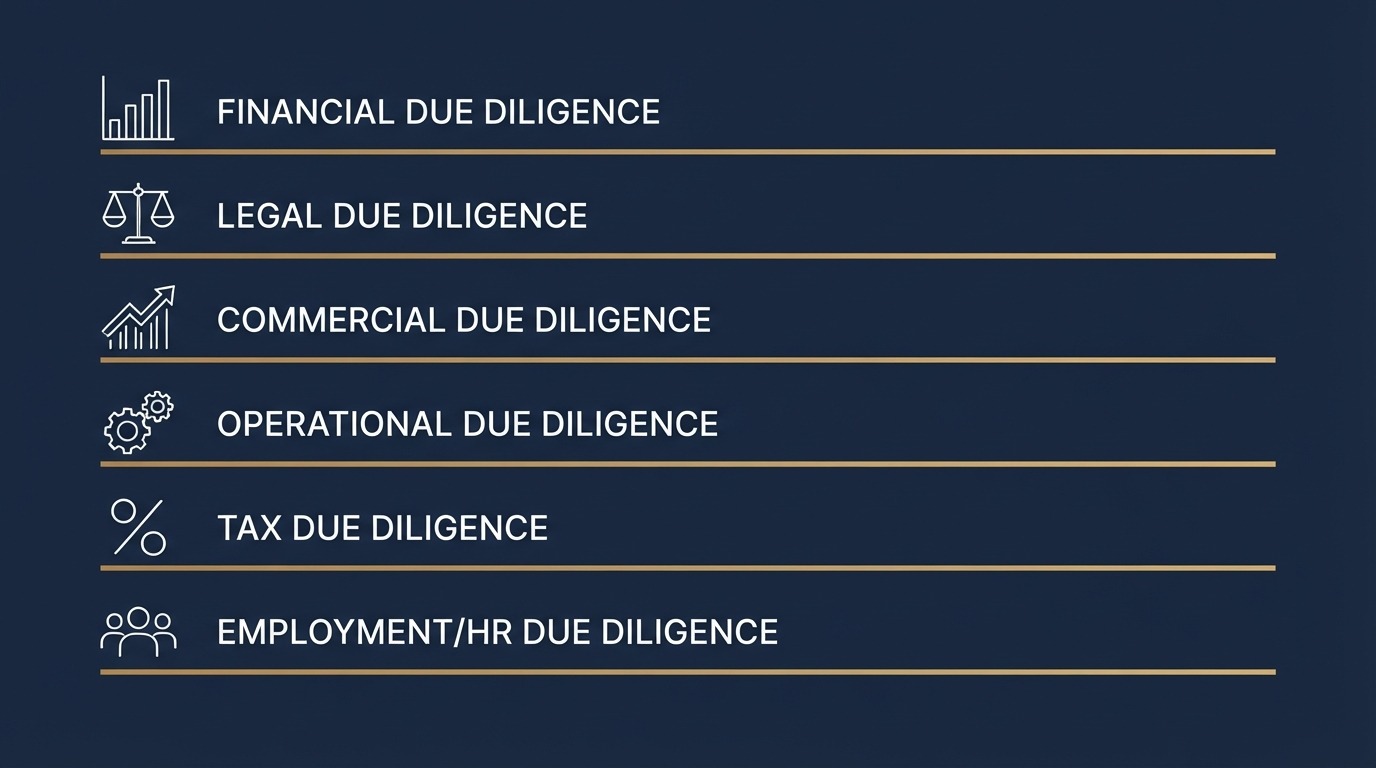
The Business Due Diligence Checklist
1. Financial due diligence
The most extensive workstream - verifying that reported profits are genuine and sustainable.
Audited or reviewed financial statements for the last 3–5 years
Normalised earnings (EBITDA), with all add-backs identified and justified
Quality of earnings - recurring vs one-off revenue
Working capital trends and requirements
Debtors, creditors, and aged receivables
Monthly management accounts reconciled to statutory accounts
Budgets, forecasts, and the assumptions behind them
Debt, liabilities, and off-balance-sheet obligations
Capital expenditure history and future requirements
Sense-check the asking price against value - see our guides on how businesses are priced to sell.
2. Legal due diligence
Looking for anything that creates liability or complicates the transfer of ownership.
Company structure, registrations, and share register
Material customer and supplier contracts (and change-of-control clauses)
Leases and property agreements
Intellectual property ownership (brands, domains, patents, trademarks)
Litigation, disputes, and claims (current and threatened)
Regulatory and licensing compliance
Insurance policies and claims history
Guarantees, security interests, and encumbrances
3. Commercial due diligence
Assessing the market position and the durability of revenue.
Customer concentration (share of revenue from top customers)
Customer contracts, retention, and churn
Market size, growth, and competitive dynamics
Pricing power and margin trends
Supplier concentration and dependency
The credibility of any growth assumptions in the valuation
4. Operational due diligence
Understanding how the business actually runs day to day.
Key operational dependencies and single points of failure
Systems, processes, and how much is documented vs held by individuals
Plant, equipment, and asset condition (where relevant)
Supply chain and logistics
Quality control and any operational risks
5. Tax due diligence
Compliance history and any outstanding tax liabilities
GST, PAYG, payroll tax, and superannuation obligations
Tax implications of the deal structure (share sale vs asset sale)
Any historical tax positions that could create exposure
6. Employment & HR due diligence
Employment contracts and terms
Key-person dependency and retention risk
Entitlements, leave liabilities, and superannuation
Workplace agreements, disputes, and compliance
Organisational structure and management depth
7. IT & systems due diligence
Core software, systems, and licensing
Data, cybersecurity, and privacy compliance
Reliance on legacy or unsupported systems
Whether systems transfer cleanly on change of ownership
8. Environmental & compliance (where relevant)
Environmental obligations and any contamination risk
Workplace health and safety compliance and history
Industry-specific regulatory obligations
Red Flags to Watch For During Due Diligence
Some findings should prompt serious caution: financial records that don't reconcile cleanly, heavy reliance on one or two customers, a business that can't function without the current owner, undisclosed litigation or tax exposures, and a seller who is vague or evasive about why they're selling. None automatically ends a deal, but each demands closer scrutiny - and may justify a price adjustment, a change in structure, or walking away. Learn to recognise them early, as covered in the common mistakes when buying a business.
How to Use This Checklist
Use this checklist to scope your due diligence, assign each workstream to the right advisor, and track what has been verified. Financial and legal due diligence almost always require specialist advisors; commercial and operational review benefit from experienced M&A guidance. The goal is a process that is thorough without being so slow it kills the deal's momentum.
Blackmont Advisory acts as an exclusive buyer advocate, helping acquirers scope and manage a due diligence process that protects their investment, alongside their legal and financial advisors, on the way to a well-executed completion. As a boutique, senior-led M&A firm based in Melbourne with a global network, we work exclusively for you. Our step-by-step guide to buying a business and broader checklist for buying a business set out the full acquisition process around this due diligence stage.
Thorough due diligence is not a formality - it is the difference between a confident acquisition and an expensive surprise.
Planning an acquisition? Register your acquisition brief.
Frequently Asked Questions
What should a business due diligence checklist include? A complete checklist covers financial (earnings, working capital, liabilities), legal (contracts, IP, litigation, compliance), commercial (market, customer concentration), operational (systems, dependencies), tax, employment/HR, IT and systems, and - where relevant - environmental and safety. Each workstream verifies a different area of risk before completion.
How long does due diligence take when buying a business? It varies with the size and complexity of the business, but it should never be rushed. Give experienced legal and financial advisors genuine time to work through each area properly - a rushed process is a leading cause of post-acquisition disputes and undisclosed issues surfacing after completion.
What is the most important part of due diligence? Financial due diligence is usually the most extensive, because it verifies that reported profits are genuine and sustainable. But commercial risks - particularly customer concentration and key-person dependency - and undisclosed legal or tax liabilities are equally capable of derailing a deal, so no workstream should be skipped.
What are the biggest red flags in due diligence? Financial records that don't reconcile, heavy customer concentration, a business dependent on the current owner, undisclosed litigation or tax exposures, and a seller who is evasive about why they're selling. Each warrants closer scrutiny and may justify a price adjustment or walking away.
Do I need an advisor to run due diligence? Financial and legal due diligence almost always require specialist advisors, and experienced M&A guidance helps scope the commercial and operational review. A buy-side advisor also keeps the process thorough without losing deal momentum, and levels the field against a professionally represented seller.