

Every acquirer starts in the same place: wanting to know how to find a business to buy that genuinely fits their strategy, budget, and risk appetite. The instinct for many first time buyers is to search public listing sites, but if you have spent any time looking for businesses for sale, you will have noticed something quickly. The volume of quality opportunities on public platforms is thin, and the ones that are listed have often already been shopped around for months.
This guide explains why that happens, and where serious buyers actually source their acquisitions.

Why Quality Businesses for Sale Rarely Appear Publicly
At the smallest end of the market, public listing platforms make sense. A small retail business or local service company can be listed openly with limited downside for the owner. But once a business reaches a more meaningful scale, with an established management structure and genuine market position, the calculation changes.
Owners of businesses at this level are usually concerned about several things a public listing exposes them to:
Staff discovering the business is for sale before any deal is confirmed, creating uncertainty and potential attrition
Competitors using the listing as an opportunity to poach customers or key employees
Customers and suppliers reassessing the relationship out of concern about continuity
Confidential financial information becoming visible to parties with no genuine intent to transact
Because of this, the majority of quality businesses are sold through a private, controlled process rather than a public listing. If you are only searching public platforms, you are missing a significant part of the market. For a broader view of the channels available to acquirers, our step-by-step guide to buying a business walks through the full process from brief to completion.
Where the Real Opportunities Are
If public listings are not the whole answer, how do serious buyers find businesses to buy? There are a few reliable channels.
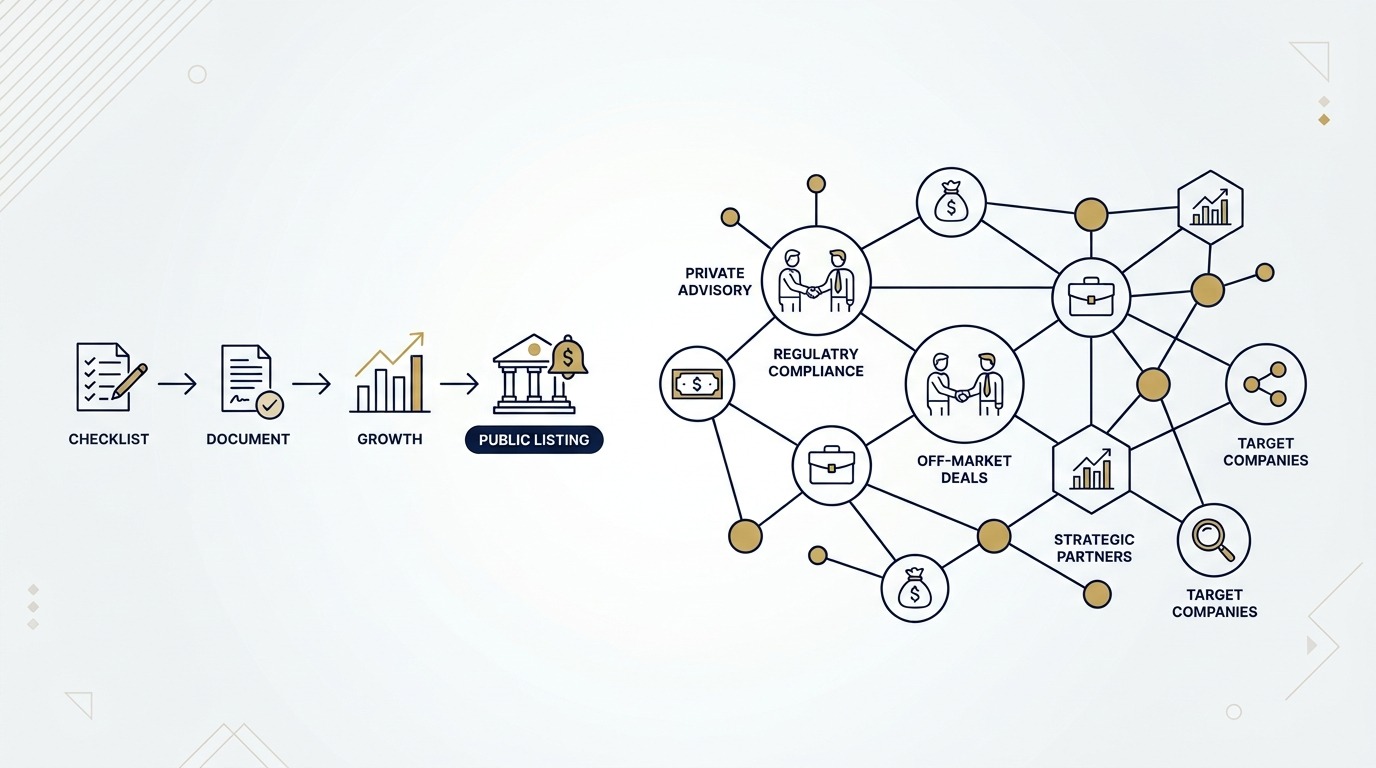
Boutique advisory firms. Specialist advisors maintain private relationships with business owners who are considering a sale but have not gone to market. Registering your brief with a firm like Blackmont Advisory means you are proactively matched with on market and off market opportunities as they arise, often before any formal marketing process begins. You can register your acquisition brief here.
Industry networks and referrals. Accountants, lawyers, and other advisors who work with business owners often know when a client is considering succession or an exit, long before it becomes public knowledge. Building relationships within your target industry can surface opportunities that never reach a formal process.
Direct approach. Some acquirers identify businesses they would like to own and make a direct, respectful approach to the owner, even if the business has never indicated it is for sale. This works best when supported by a credible advisor who can facilitate the introduction professionally.
Distressed and transitional opportunities. For buyers comfortable with complexity, distressed business sales represent a separate pipeline entirely, often requiring an accelerated timeline, creditor dynamics, and more creative capital structures, but offering meaningful value for the right buyer. Investors and family offices pursuing this route may also want to understand how private equity approaches acquisitions.
Defining What You Are Actually Looking For
Before you can find a business to buy, you need a genuinely clear picture of what you want. Vague searches produce vague results. Buyers who move efficiently define:
Sector, including which adjacent industries they would consider, whether business services, manufacturing, healthcare, industrials, distribution, hospitality, trade services or professional services
Deal size, scaled to what you can realistically fund — if you are still working through this, our guide on how to finance a business acquisition breaks down the common structures
Geography, and whether they are open to opportunities outside their home market
Preferred deal structure, and how much flexibility they have on cash versus financed components
Control, whether they want majority control or would consider a minority or partnership position
This is exactly the information an advisor uses to filter opportunities on your behalf, rather than sending you every listing that loosely fits.
Evaluating Whether an Opportunity Is Worth Pursuing
Once you find businesses for sale that appear to match your brief, a quick initial filter saves significant time before committing to a full assessment:
Does the financial performance align with what was represented, at a headline level?
Is the industry structurally sound, or facing long term disruption?
Does the business have customer or revenue concentration that would concern you?
Is the seller genuinely motivated to transact, or testing the market without real intent?
An experienced advisor can often answer these questions for you before you invest significant time, because they have already assessed the opportunity and prepared a proper Information Memorandum. When you do move to a deeper review, our ultimate due diligence guide and checklist for buying a business will help you pressure-test the opportunity properly.
Red Flags to Watch For as You Search
Not every opportunity that reaches you, whether through a public platform or a private channel, is worth pursuing. A few warning signs are worth learning to recognise early, before you invest time in a deeper assessment. A seller who cannot produce clean, consistent financial records is one of the clearest signals that the process is not yet ready, regardless of how attractive the headline story sounds. A business that has quietly been shopped to multiple buyers over an extended period, without a transaction closing, often carries an underlying issue that has not been disclosed. And an owner who is vague or evasive about why they are actually selling should prompt further questions before you proceed.
None of these signs mean an opportunity should be abandoned outright, but they do mean it deserves closer scrutiny before you commit significant time or advisory fees to pursuing it further. It is also worth learning from the experience of others, our breakdown of the most common mistakes buyers make when purchasing a business covers the errors that most often derail a deal.

Why an Advocate Changes the Search Entirely
The difference between searching independently and working with a specialist advisor is not just convenience. It is access. A boutique firm builds relationships with business owners over years, often well before those owners are ready to formally sell. That means the opportunities available through an advisor are frequently unavailable through any other channel, public or private.
Blackmont Advisory sources, assesses, and negotiates on behalf of buyers, including first time buyers, entrepreneurs, corporate executives transitioning to ownership, companies expanding through acquisition, and investors and family offices seeking direct ownership. Based in Melbourne with a global network of buyers, investors and partners, we work exclusively for you, sourcing both on market and off market opportunities matched to your brief.
Start With a Clear Brief
If you are serious about buying a business rather than casually browsing, the most productive first step is not another search on a public platform. It is a confidential conversation with an advisor who can tell you, honestly, what is realistically available in your target sector right now.
Finding the right business to buy is less about searching harder and more about searching in the right place, with the right people, and with a clearly defined brief that lets serious opportunities find their way to you.
Ready to start? Register your acquisition brief with Blackmont Advisory and let the right opportunities find you.