

Selling a substantial business is not just a transaction. For most owners, it is the largest single financial event of their life, and the proceeds need to be managed with the same level of care and strategy that went into building the business in the first place. This is where a high net worth financial advisor becomes an essential part of the process, working alongside your mergers and acquisitions advisor rather than in place of one.
This guide explains what financial advisors for high net worth individuals actually do, how their role differs from your deal advisor, and why engaging one early, rather than after settlement, makes a meaningful difference to your outcome.

What Is a High Net Worth Financial Advisor?
A high net worth financial advisor helps individuals manage, grow, and protect substantial wealth - particularly through a major liquidity event such as a business sale. This is a distinct specialism from general financial planning.
At a basic level, a financial advisor helps individuals manage, grow, and protect their wealth. But the term covers a wide range of services and expertise levels, and a general financial planner is not the same as an advisor experienced in working with high net worth individuals going through a significant liquidity event.
An advisor specialising in this space typically brings expertise in structuring a large lump sum for long term security, tax efficient investment strategies specific to post sale wealth, estate and succession planning, and risk management appropriate to a concentrated wealth position that, until recently, existed almost entirely within a single operating business.
How Is This Different From Everyday Financial Advice?
The difference is the shape of the wealth event: most financial advice manages gradual accumulation, while a business sale creates a single, large capital event that instantly transforms an owner's financial position.
Most financial advisors work with clients who are gradually accumulating wealth through salary, superannuation contributions, and modest ongoing investment. Selling a business creates a fundamentally different scenario, often after years or decades where the majority of an owner's net worth was tied up in an illiquid asset.
This shift brings specific challenges that a generalist advisor may not be equipped to handle well, including how to deploy a large lump sum without excessive risk concentration, how to structure the proceeds for tax efficiency given the specific circumstances of the sale, and how to plan for a future without the business income the owner has relied on for years.
When Should You Engage a Financial Advisor When Selling a Business?
Engage a financial advisor early - ideally alongside your M&A advisor and before terms are agreed - because planning decisions made before the sale, particularly around deal structure, can materially affect your after-tax proceeds.
One of the most common mistakes business owners make is waiting until after settlement to think seriously about wealth management. In reality, financial and tax planning decisions made before the sale can materially affect the after tax proceeds you actually receive.
Engaging an independent financial advisor early in your sale process allows these considerations to be factored into deal structuring itself. For example, the choice between a full cash payment and a structure involving vendor finance or an earnout can have very different tax and cash flow implications, and it is far easier to plan for this before terms are agreed than to react to it afterward. Building this into your planning early is exactly what our exit planning approach and guide to creating a bulletproof exit strategy are designed to support.
Independent Financial Advisor vs Tied Advisor: What's the Difference?
An independent financial advisor is not incentivised to sell proprietary products, so their advice is more likely to be genuinely aligned with your interests. A tied advisor is attached to an institution with its own products and targets.
When selecting a financial advisor for this stage of your life, this distinction matters considerably given the scale of a liquidity event from a business sale.
When evaluating advisor firms, ask directly about their fee structure, whether they receive any commissions or incentives tied to specific products, and whether they have direct experience working with clients who have recently sold a business, as opposed to clients who have accumulated wealth gradually over time.
How This Role Complements Your Mergers and Acquisitions Advisor
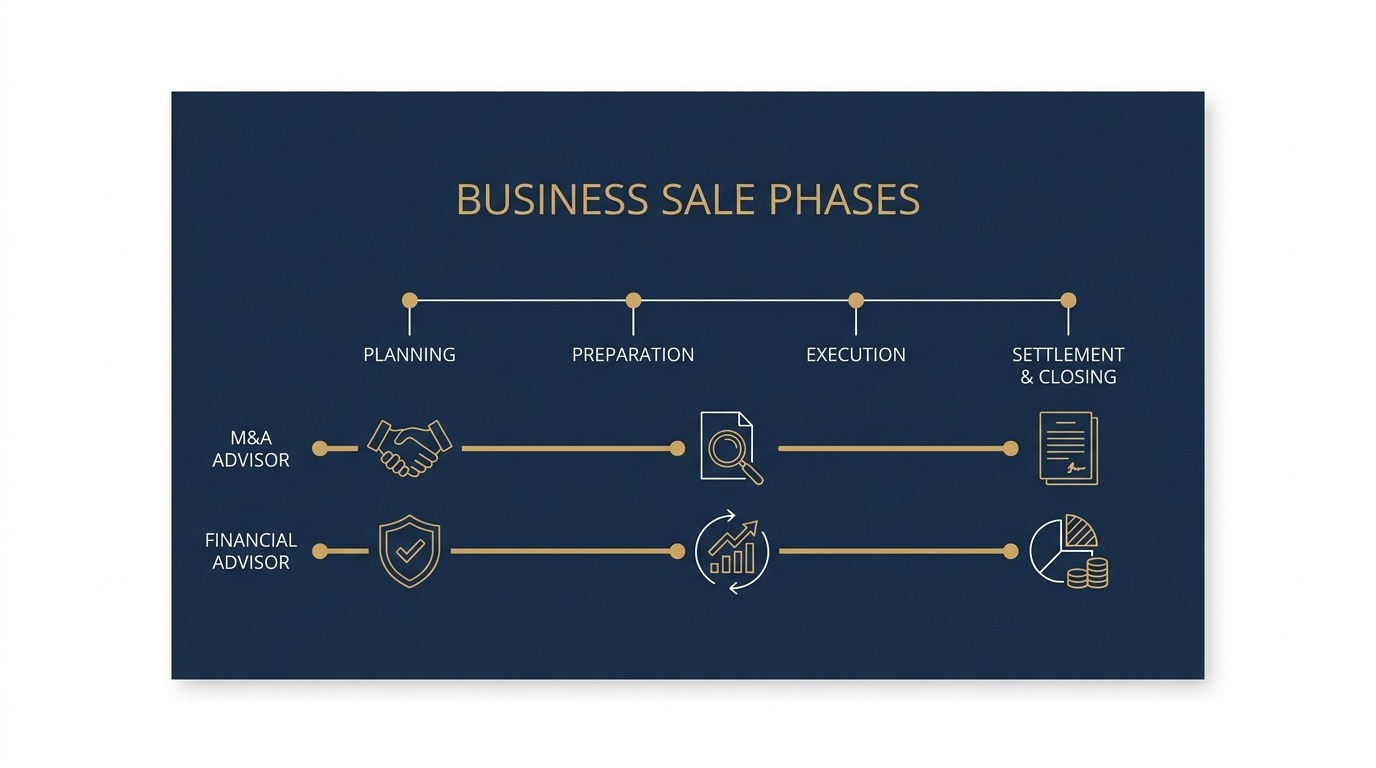
A high net worth financial advisor and your M&A advisor serve different, complementary purposes. Your M&A advisor manages the transaction; your financial advisor manages what happens to the proceeds afterward.
Your mergers and acquisitions advisor manages the transaction itself, including buyer identification, negotiation, deal structuring from the business's perspective, and coordination through to settlement. Our step-by-step business sale process and guide on why the right advisor maximises your sale price explain that side in detail. Your financial advisor, by contrast, focuses on what happens to the proceeds once they land in your hands, and how to structure your broader financial life around this new position.
The best outcomes tend to occur when these two advisors are introduced early and communicate throughout the process, ensuring the deal structure agreed with the buyer also serves your personal financial planning objectives, rather than the two processes operating in isolation from each other.
Questions to Ask Before You Sell
As you prepare for a business sale, it is worth having preliminary conversations with a financial advisor about several practical questions well before settlement:
What tax structures might apply to the proceeds given your specific circumstances?
How might different deal structures affect your after tax outcome?
What does a realistic long term income plan look like once the business is no longer generating your primary income?
How should proceeds be diversified to manage the risk that comes with your wealth transitioning from one operating business into a broader portfolio?
If you are still weighing whether now is the right time, our complete guide to selling a business and a confidential valuation are sensible first steps.
Bringing the Right Advisors to the Table
Blackmont Advisory works exclusively on the business sale process itself, structuring transactions, managing buyer relationships, and negotiating terms that protect our clients' outcomes. As a senior led advisory firm, we regularly work alongside our clients' independent financial and tax advisors throughout a sale process, ensuring that deal structure decisions reflect both the commercial realities of the transaction and each seller's broader financial planning objectives.
If you are considering a sale and have not yet engaged a financial advisor experienced with high net worth liquidity events, it is worth doing so early, in parallel with your mergers and acquisitions advisor, rather than treating it as a task for after settlement.
Selling a business well is about more than achieving a strong price. It is about ensuring the wealth created translates into lasting financial security, and that requires the right advisors working together from the very beginning of the process.
Planning your exit? Start with our exit planning approach.
This article is general information about the role of financial advisors in a business sale and is not personal financial, tax, or legal advice. Speak with a qualified, independent advisor about your specific circumstances.
Frequently Asked Questions
What is a high net worth financial advisor? A high net worth financial advisor specialises in managing, growing, and protecting substantial wealth - particularly through a major liquidity event such as a business sale. They bring expertise in structuring large lump sums, tax-efficient investment, estate and succession planning, and managing concentrated wealth positions.
When should I engage a financial advisor when selling my business? Early - ideally alongside your M&A advisor and before terms are agreed. Planning decisions made before the sale, particularly around deal structure, can materially affect your after-tax proceeds, so it is far easier to plan ahead than to react after settlement.
What is the difference between an independent and a tied financial advisor? An independent financial advisor is not incentivised to recommend proprietary products, so their advice is more likely to align with your interests. A tied advisor is attached to an institution with its own products and targets. Given the scale of a business-sale liquidity event, that independence matters.
Do I need both a financial advisor and an M&A advisor? Yes - they serve different, complementary roles. Your M&A advisor manages the transaction (buyers, negotiation, structure, settlement); your financial advisor manages what happens to the proceeds and your broader financial life afterward. The best outcomes come when both are engaged early and communicate throughout.
How does deal structure affect after-tax proceeds? Different structures - full cash versus vendor finance or an earnout - carry different tax and cash-flow implications. Because these are decided during negotiation, planning for them before terms are agreed can meaningfully change what you keep after tax.