

For many owners, selling a business and stepping into retirement happen at the same moment. After years, often decades, of having the majority of your wealth tied up in one operating business, you suddenly hold a large sum of money and no longer have the business income you relied on. This is a profound financial shift, and it deserves as much care and planning as the sale itself. Done well, financial planning after selling a business turns the proceeds of your life's work into lasting security. Done poorly, or left too late, it can put that security at risk.
This guide explains how retirees can approach financial planning after selling a business: the challenges this transition brings, the practical steps to take, how to replace your business income, and why the right planning, started early, makes such a difference.

What Should You Do Financially After Selling a Business?
After selling a business, the priority is to avoid rushing, then clarify your retirement income needs, structure the proceeds to manage risk, plan for tax, and put a long term income plan in place. Because the sale transforms your wealth from a single operating business into investable capital, and removes your business income, the focus shifts from building wealth to preserving it and generating reliable income for the rest of your life.
The steps below walk through this in detail. If you have not yet sold, planning ahead matters even more, and our guide on what a high net worth financial advisor does when you sell is a useful companion read.
Why Selling a Business Changes Retirement Planning
Most retirement planning advice assumes wealth built gradually through salary, superannuation, and steady investment. Selling a business creates a very different situation. You experience a single, large capital event that instantly changes your financial position, and at the same time you lose the business income that funded your lifestyle for years.
This creates several challenges at once. You now hold a large lump sum that needs to be deployed carefully, rather than concentrated or left idle. Your wealth has shifted from one illiquid operating business into capital that must now generate your income. And you face decisions about tax, structure, and risk that you may never have had to make before. These are the specific issues that financial planning after a business sale needs to address.
The Key Challenges Retirees Face After Selling
Before the practical steps, it helps to name the challenges clearly:
Deploying a large lump sum. A significant sum arriving at once needs a considered plan, not quick decisions driven by the pressure of having cash to invest.
Replacing business income. The income that funded your lifestyle has stopped. Your capital now has to generate reliable income in its place.
Managing concentration risk. Your wealth was concentrated in one business. Moving it into a sensible, diversified position is central to protecting it.
Tax on the proceeds. How the sale was structured, and how the proceeds are invested, both carry tax implications worth planning for.
The lifestyle and identity shift. Many owners underestimate the personal adjustment of stepping away from a business that defined much of their working life.
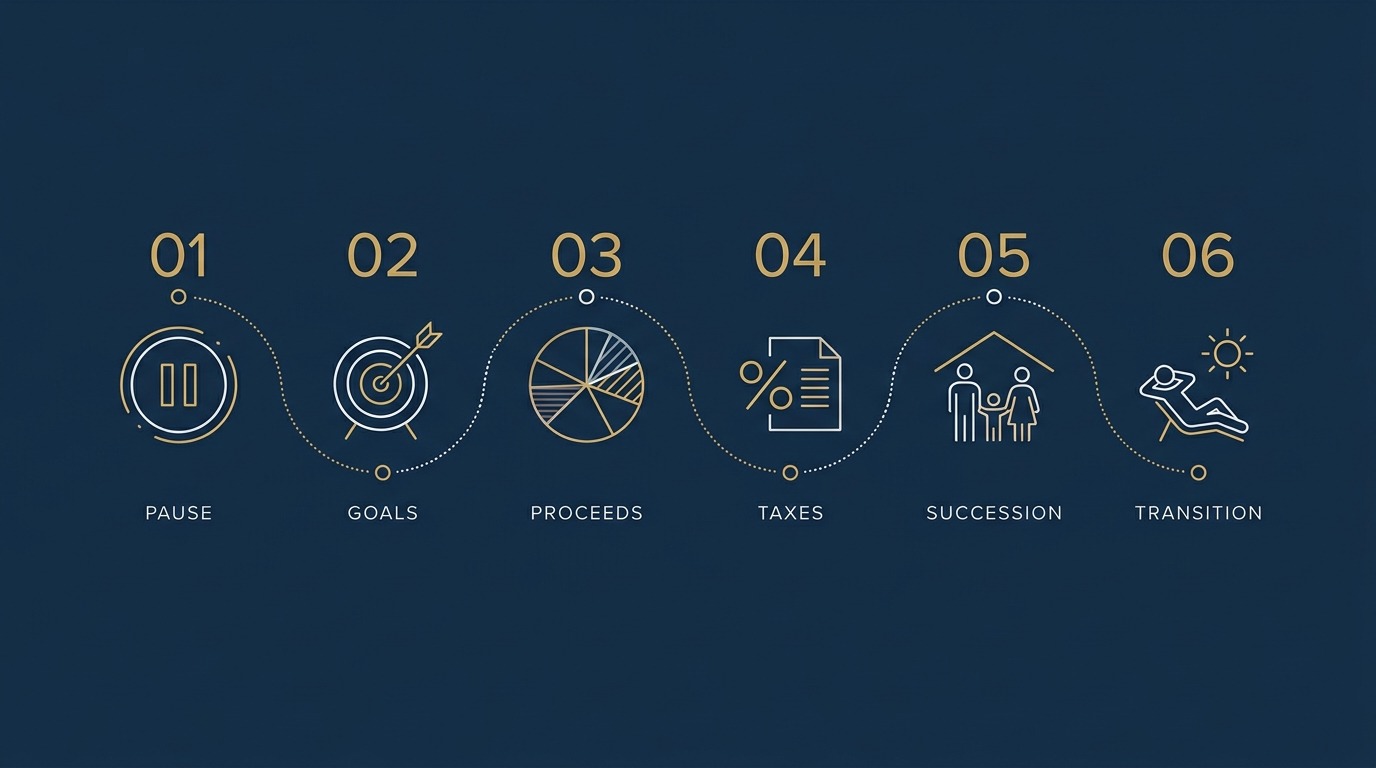
Step 1: Do Not Rush
The single most valuable thing you can do immediately after a sale is resist the urge to make quick decisions. There is rarely any need to deploy a large sum immediately, and quick decisions made under the pressure of suddenly holding cash are often the ones later regretted. It is usually sensible to park the proceeds somewhere safe and accessible while you develop a proper plan. Giving yourself time, weeks or months rather than days, to think clearly and take advice is not indecision. It is prudent.
Step 2: Clarify Your Retirement Goals and Income Needs
Before deciding what to do with the proceeds, get clear on what you actually need. What does your desired lifestyle cost each year? What one-off expenses or goals do you have, such as travel, helping family, or property? How long does the money need to last, and what level of income do you want it to produce? These questions sound simple, but answering them honestly is the foundation of every sound decision that follows. A realistic long term income plan starts here.
Step 3: Structure and Diversify the Proceeds
With your goals clear, the focus turns to structuring the proceeds to produce income while managing risk. The central principle is diversification: moving from a position where your wealth sat in one operating business into a sensible spread of assets appropriate to your goals, time horizon, and comfort with risk. The aim is a portfolio that can generate reliable income without exposing you to risks that could undermine your security. This is specialist work, and it is where experienced, independent advice earns its value.
Step 4: Plan for Tax
Tax deserves attention both in how the sale is structured and in how the proceeds are invested. Decisions made before the sale, particularly around deal structure, can materially affect the after tax proceeds you receive, which is one reason to plan early. After the sale, how and where you hold and invest the proceeds also carries tax consequences. This is an area to work through with a qualified tax adviser, ideally one who is already familiar with your situation. Our guide on earnouts, vendor finance and deal structures explains how the structure of the sale itself affects what you keep.
Step 5: Estate and Succession Planning
A significant liquidity event is the right moment to review your estate planning. How your wealth is held, how it will pass to the next generation, and how to do so efficiently are all worth addressing while you plan the rest of your financial life. For many retirees, ensuring the proceeds benefit their family in the way they intend is as important as the income the money generates for them.
Step 6: Plan the Personal Transition, Not Just the Money
Financial planning after selling a business is not only about money. Many owners find the personal transition, moving from running a business that occupied much of their identity to a different phase of life, more challenging than they expected. It is worth giving thought to how you want to spend your time and what will give the next phase meaning, alongside the financial plan. Owners who plan both tend to settle into retirement more comfortably than those who plan only the finances.
The Role of an Independent Financial Advisor for Retirees
An independent financial advisor experienced with business sale clients brings particular value at this stage. They can help you structure a large lump sum for long term security, build a realistic income plan, manage risk and diversification, and address tax and estate considerations, all with advice aligned to your interests rather than a product provider's. Choosing the right one matters a great deal, and our guide on how to choose an independent financial advisor sets out exactly what to look for.
Common Mistakes Retirees Make After Selling
A few mistakes recur often enough to be worth naming. Deploying the whole sum too quickly, under the pressure of holding cash, is one. Leaving it all idle for too long, losing ground to inflation, is another. Keeping too much concentrated in a single investment, repeating the concentration risk of the business, is a third. Underestimating how long the money needs to last, or how much income you will actually want, is also common. And waiting until after settlement to seek advice, rather than planning before the sale, often costs more than any fee. Each of these is avoidable with planning and good advice.
When to Start Planning
The best time to start is before you sell, not after settlement. Planning the financial and tax aspects of your retirement in parallel with the sale allows deal structure decisions to reflect your personal objectives, and means you step into retirement with a plan already in place rather than scrambling to build one while holding a large, un-invested sum. Our exit planning approach is designed to bring these considerations together early.
Bringing the Right Advisors Together
Blackmont Advisory works exclusively on the business sale process itself, structuring transactions and negotiating terms that protect our clients' outcomes. As a senior led advisory firm based in Melbourne, we regularly work alongside our clients' independent financial and tax advisors throughout a sale, so that deal structure decisions reflect both the commercial realities of the transaction and each seller's retirement and financial planning objectives. To understand what your business might realistically achieve, and to begin planning early, start with a confidential valuation, and see our complete guide to selling a business.
Selling a business well is about more than achieving a strong price. For a retiring owner, it is about ensuring the wealth created translates into a secure, comfortable, and meaningful retirement, and that begins with planning early and choosing the right advisors to guide you.
Planning your exit and retirement? Start with our exit planning approach.
This article provides general information about financial planning after selling a business and is not personal financial, tax, or legal advice. Speak with a qualified, independent, appropriately licensed advisor about your specific circumstances.
Frequently Asked Questions
What should I do with the money after selling my business? Avoid rushing. Park the proceeds somewhere safe and accessible, clarify your retirement income needs, then structure the money into a diversified plan that generates reliable income while managing risk. Plan for tax and estate matters, ideally with an independent financial advisor experienced with business sale clients, and take weeks or months rather than days to decide.
How do I replace my business income in retirement? Your capital now has to generate the income your business once did. This usually means structuring the proceeds into a diversified portfolio designed to produce reliable income aligned with your lifestyle needs and time horizon. A realistic income plan, built around what you actually need each year, is the foundation.
Should I get financial advice before or after selling my business? Ideally before. Planning decisions made before the sale, particularly around deal structure, can materially affect your after tax proceeds, and starting early means you enter retirement with a plan already in place. Waiting until after settlement is one of the most common and costly mistakes owners make.
What are the biggest financial mistakes retirees make after selling a business? Deploying the whole sum too quickly, leaving it idle too long, keeping too much concentrated in one investment, underestimating how long the money needs to last, and waiting until after settlement to seek advice. Each is avoidable with planning and good, independent advice.
How much do I need to retire after selling my business? It depends entirely on your desired lifestyle, your other assets, and how long the money needs to last. The starting point is an honest assessment of your annual income needs and one-off goals, from which a financial advisor can model whether your proceeds and other assets support the retirement you want.
Do I need an estate plan after selling my business? A significant liquidity event is an ideal time to review your estate planning. How your wealth is held and how it will pass to the next generation, efficiently and in line with your wishes, are worth addressing while you plan the rest of your financial life.