

Selling your business to a private equity firm can be one of the most rewarding exits available to a mid-market owner - but it is also a different experience from selling to an individual buyer or a trade competitor. Private equity firms run disciplined, professional processes, conduct rigorous due diligence, and often want the founder to stay involved for a period after the sale. Knowing what to expect at each stage helps you negotiate from confidence and avoid surprises.
This guide walks through exactly what to expect when selling your business to a private equity firm - the process, the deal structures, the due diligence, and what changes after completion.

What to Expect When Selling to a Private Equity Firm
When you sell to a private equity firm, expect a structured, professional process: a credible approach, intensive due diligence, a deal structure that often includes retained equity or an earnout, and a growth plan for the business afterward. PE firms buy with the intention of growing the business and exiting within five to seven years, so they are disciplined buyers who reward well-prepared sellers.
Understanding the criteria PE firms assess first helps enormously - see our guide on what private equity firms look for in a business, and, if you're weighing buyer types, private equity vs family office.
How Selling to Private Equity Differs From a Trade Sale
Private equity firms differ from trade (strategic) buyers in important ways. A trade buyer usually wants to absorb your business into their own operation and may replace management; a private equity firm typically wants to back and grow the existing business, often keeping the founder and team involved. PE processes are also more structured and financially rigorous, and PE firms are repeat, professional acquirers - which is why experienced representation on your side matters, as covered in why using a specialist advisor maximises your outcome.
The Private Equity Sale Process, Step by Step
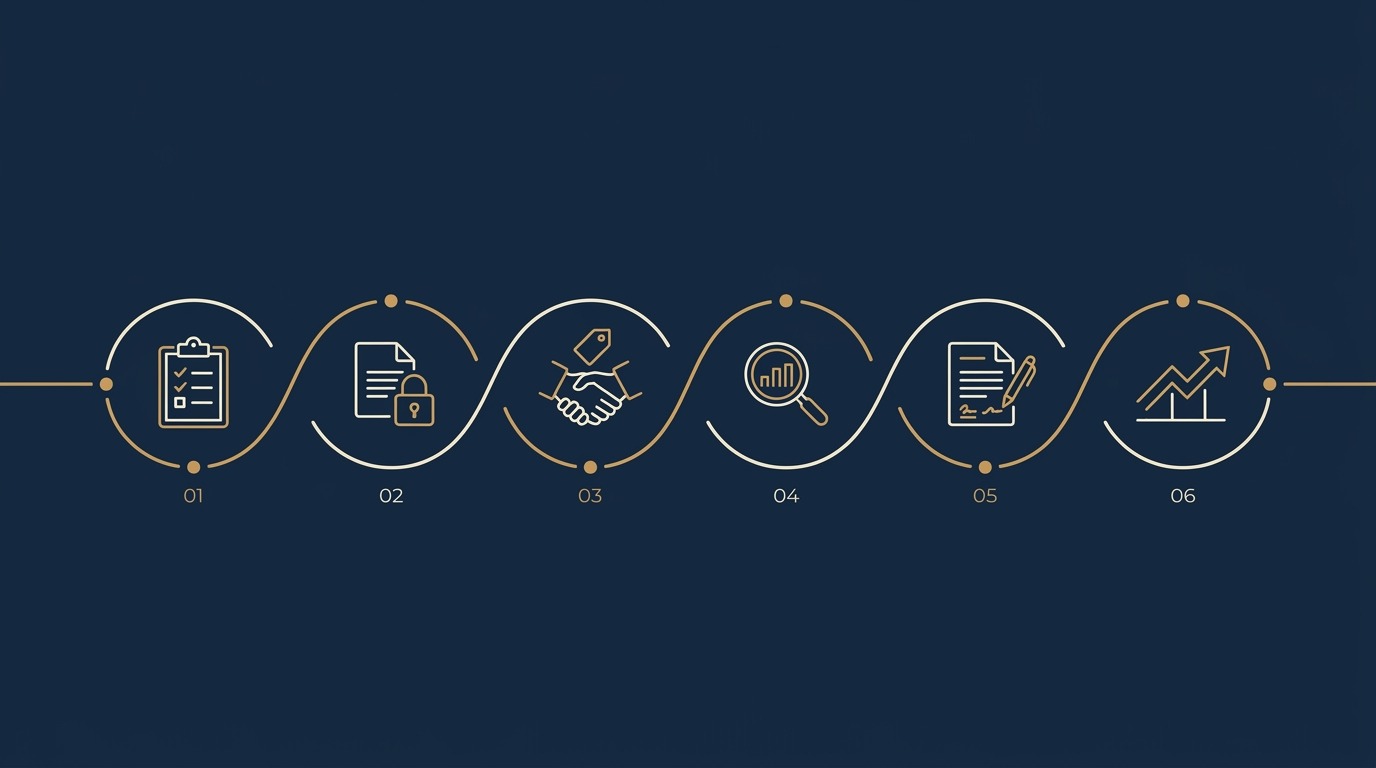
A sale to a private equity firm generally follows a consistent sequence:
Preparation and positioning. You get the business sale-ready and prepare an investment-grade Information Memorandum that presents the business in the terms PE assesses.
Confidential approach. Qualified private equity firms are approached discreetly, under confidentiality, as part of a competitive process rather than a single conversation.
Indicative offer. Interested firms submit a non-binding indicative offer on price and structure, subject to due diligence.
Due diligence. The PE firm, with its advisors, rigorously verifies the business (more on this below).
Negotiation and final terms. Price, structure, your ongoing role, and legal terms are negotiated and documented.
Completion and growth. The deal completes, and the PE firm implements its value-creation plan for the business.
For the full framework, see our step-by-step business sale process and M&A basics for business owners.
Deal Structures: Expect More Than Just Cash
One of the biggest differences when selling to private equity is that the deal is rarely all cash at completion. PE firms commonly structure deals with:
Retained (rollover) equity - you keep a minority stake and share in the future growth, often realising a "second bite of the cherry" when the PE firm exits.
Earnouts - part of the price tied to the business hitting agreed performance targets after completion.
Blended cash and deferred components - balancing certainty for you with capital efficiency for the buyer.
Each structure affects what you actually receive and when. Understanding them before you negotiate is essential - see our guide on earnouts, vendor finance and deal structures and how to price a business to sell.
Expect Rigorous Due Diligence
Private equity firms conduct thorough, professional due diligence - do not expect a lighter touch. They will scrutinise your financials, customer contracts, operations, and growth assumptions in detail. This is exactly why preparation matters: clean, verifiable financials and proactively addressed weaknesses protect both the deal and your price. Issues discovered late are a common trigger for renegotiation. Our ultimate due diligence guide and what due diligence really involves show what to prepare for.
What Changes After You Sell to Private Equity
After completion, expect the private equity firm to implement a value-creation plan - which may include new reporting and governance, operational improvements, investment in growth, and add-on acquisitions. Importantly, many PE firms want the founder and management team to stay and help drive that growth, at least for a transition period, rather than walking away immediately.
This can be a significant positive for owners who believe in the business's future and want to benefit from its next phase, particularly where retained equity gives them a stake in the upside. It does, however, mean adjusting to shared ownership and more formal reporting than many founders are used to.
Your Role After the Sale
Expect to have a defined role after selling to private equity, at least for a period. Where you've retained equity or agreed an earnout, your continued involvement is usually part of the deal - aligning your interests with the PE firm's growth plan. The length and nature of this role is a key negotiation point, and worth clarifying early so expectations are aligned on both sides.
Pros and Cons of Selling to Private Equity
Potential advantages: access to well-capitalised, professional buyers; the chance to realise value now while retaining upside through equity; a partner to fund and drive growth; and often continuity for your team.
Potential trade-offs: rigorous due diligence; deal structures that defer part of your proceeds or put them at risk; shared ownership and more formal governance; and a defined post-sale role rather than a clean break.
Whether these net out positively depends on your goals. If a clean, immediate exit with maximum certainty matters most, a different buyer or structure may suit better - which is why comparing your options before going to market is sensible.
How to Get the Best Outcome Selling to Private Equity
The strongest outcomes come from preparation and a competitive process. Get the business sale-ready, present it credibly, and run a confidential process that puts multiple qualified private equity firms in competition - the tension between serious buyers is what drives both price and terms. Our readiness checklist and exit readiness assessment are the place to start.
Blackmont Advisory manages confidential sales to private equity firms and other buyers for business owners across Australia. As a boutique, senior-led M&A firm based in Melbourne with a global network, we prepare your business, run a competitive process, and negotiate the structure and terms that protect your outcome - never representing both sides of the same deal. For the wider picture, see our complete guide to selling a business.
Selling your business to a private equity firm can be an excellent outcome - provided you understand what to expect and prepare to meet a disciplined buyer on equal terms.
Considering a sale to private equity? Start with a confidential valuation.
Frequently Asked Questions
What happens when you sell your business to a private equity firm? You go through a structured process - preparation, a confidential competitive approach, an indicative offer, rigorous due diligence, negotiation, and completion. The deal often includes retained equity or an earnout, and the PE firm then implements a growth plan, frequently keeping the founder and team involved for a transition.
Do you have to stay on after selling to private equity? Often, yes - at least for a period. Where you've retained equity or agreed an earnout, continued involvement is usually part of the deal, aligning your interests with the firm's growth plan. The length and nature of that role is a key negotiation point to clarify early.
How much of my business will private equity buy? It varies. Some private equity deals are full buyouts; many are majority stakes where the founder retains a minority (rollover) equity position and shares in future growth. The right structure depends on your goals and the firm's thesis.
Is selling to private equity a good idea? It can be an excellent outcome - access to well-capitalised buyers, the chance to retain upside through equity, and a partner to fund growth. The trade-offs are rigorous due diligence, deferred or at-risk proceeds, and shared ownership. Whether it suits depends on whether you want a clean exit or an ongoing stake.
How long does it take to sell to a private equity firm? Similar to other mid-market sales - commonly around six to twelve months from going to market to completion, plus preparation time. PE due diligence is rigorous, so preparation is what keeps the process efficient.